/

October 3, 2024

30 Days of SEO Tips Series – Day 10: Focus on Long-Tail Keywords

In this series, we’ve explored key SEO strategies like optimizing title tags, writing meta descriptions, improving URL structures, and conducting keyword research. Today, we focus on long-tail keywords, which can be a game-changer for driving highly targeted traffic to your website. Let’s dive into why long-tail keywords matter, how to implement them, and how they fit seamlessly into your overall SEO strategy.

What Are Long-Tail Keywords?

Long-tail keywords are longer and more specific phrases that people use when they are closer to making a decision or searching for something specific. For example, while “SEO tips” is a general keyword, “how to optimize website speed for SEO” is a long-tail keyword.

These keywords may have lower search volume than short, generic terms, but they typically have higher conversion rates because they target users with clearer intent.

Why Focus on Long-Tail Keywords?

  • Higher Conversion Rates: Long-tail keywords are often used by users ready to make a purchase or decision. This results in higher-quality traffic and more conversions.
  • Lower Competition: Short keywords tend to be highly competitive, making it difficult to rank. Long-tail keywords, on the other hand, are less competitive, giving you a better chance to rank in search results.
  • Better Audience Targeting: These keywords help you connect with a specific audience searching for exactly what you offer, making your content more relevant.
  • Support Your Existing SEO Efforts: Integrating long-tail keywords complements your broader keyword strategy by filling in gaps and addressing niche queries.
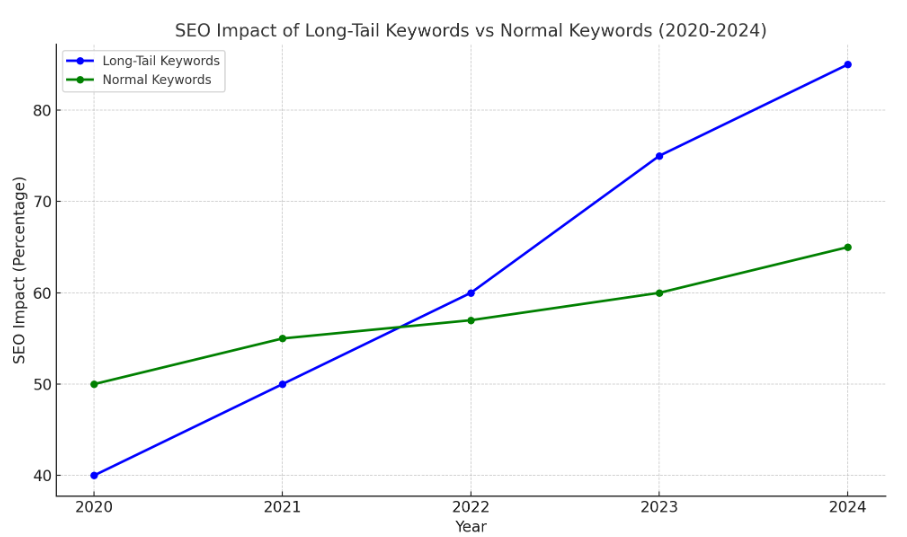
Normal Keyword Vs Long-Tail Keywords

The chart above shows the SEO impact of Long-Tail Keywords vs. Normal Keywords over a 5-year strategy. It highlights how Long-Tail Keywords gradually increase in effectiveness, surpassing normal keywords over time. By Year 5, long-tail keywords have a significant impact due to their focus on more specific and relevant search intent.

This data demonstrates the importance of prioritizing long-tail keywords in a long-term SEO strategy to capture niche audiences and improve rankings consistently. Moz offers an in-depth look at keyword research, including long-tail keyword strategies. Check out their guide

How to Implement Long-Tail Keywords in Your SEO Strategy

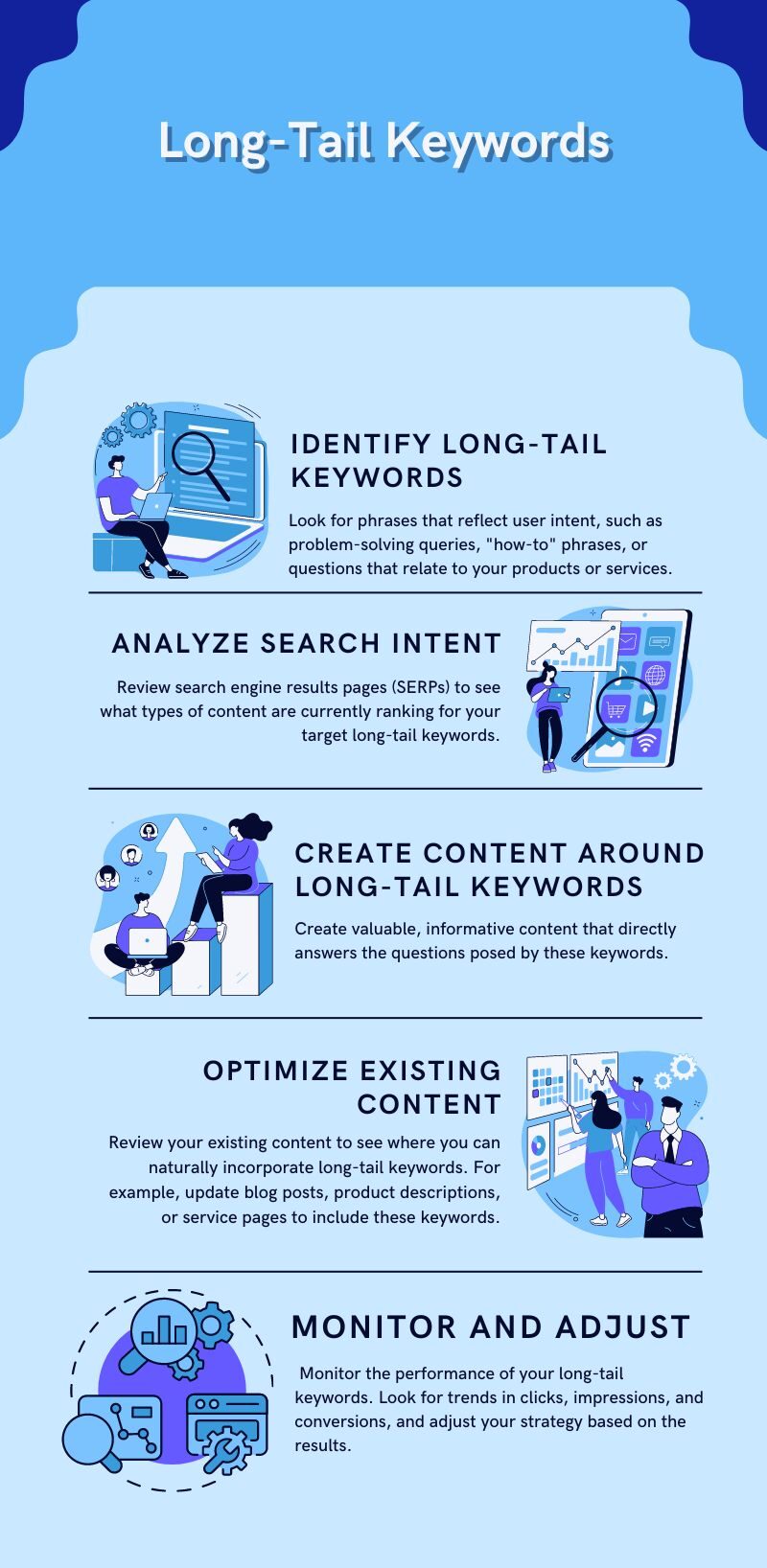
Step 1: Identify Long-Tail Keywords

Start by using keyword research tools like Google Keyword Planner or Ubersuggest to find long-tail variations of your core keywords. Look for phrases that reflect user intent, such as problem-solving queries, “how-to” phrases, or questions that relate to your products or services. 

For example, if your primary keyword is “SEO services,” long-tail variations could be:

  • Affordable SEO services for small businesses
  • How to choose the best SEO agency
  • SEO services for e-commerce websites

Step 2: Analyze Search Intent

Understanding the search intent behind the long-tail keywords is critical. People who search for long-tail keywords are often looking for specific answers. Make sure your content addresses their needs directly. Review search engine results pages (SERPs) to see what types of content are currently ranking for your target long-tail keywords.

Step 3: Create Content Around Long-Tail Keywords

Long-tail keywords lend themselves well to in-depth, detailed content like blog posts, FAQs, and product pages. Create valuable, informative content that directly answers the questions posed by these keywords.

Example: If a long-tail keyword is “how to optimize image alt text for SEO,” write a blog post titled: “A Step-by-Step Guide to Optimizing Image Alt Text for SEO.”

Step 4: Optimize Existing Content

Review your existing content to see where you can naturally incorporate long-tail keywords. For example, update blog posts, product descriptions, or service pages to include these keywords. Ensure the keywords flow naturally and don’t disrupt the readability of the content.

Step 5: Monitor and Adjust

Use tools like Google Search Console or Ahrefs to monitor the performance of your long-tail keywords. Look for trends in clicks, impressions, and conversions, and adjust your strategy based on the results.

Example of Implementing Long-Tail Keywords

Let’s say you sell organic coffee beans, and your primary keyword is “organic coffee” By targeting long-tail keywords, you might create content like:

Blog post: “How to make organic coffee at home”

Product page: “Best organic coffee beans for cold brew”

FAQ section: “What are the benefits of drinking organic coffee daily”

Incorporating these long-tail keywords into your site will help you rank for more specific searches and connect with a more targeted audience. By focusing on these, you complement broader SEO efforts like title tag optimization (as discussed on Day 1), meta description writing (Day 2), and heading tag structure (Day 3), enhancing your site’s overall ranking potential.

Conclusion

Long-tail keywords are essential for any SEO strategy. They may seem insignificant due to lower search volume, but they can bring in more relevant traffic and ultimately lead to better conversions. Integrate them into your content strategy to build a comprehensive and effective SEO approach.

Stay tuned for Day 11, where we’ll discuss how to implement schema markup.

Table of Contents

Get 30 Minute Free Consultation

Schedule your free session now and let’s create solutions that drive results.

Free Consultation Blog Page

Stay Ahead with Expert Insights

Subscribe to our newsletter for the latest trends, tips, and exclusive updates. Get actionable strategies delivered straight to your inbox.

Newsletter Form

From the same category